THE FULL
Picture.
Seven years of work beyond the UI. Brand identity, media production, live events, and growth strategy. Three chapters, and the context behind how the product work got done.
PRODUCT AND
Design System Ownership.
From 2019 to 2026 I was the senior designer and creative lead at Odysseus Software, working across three products: SOPO, a cross-platform sweepstakes poker app that reached 67,000+ registered users and a $25M valuation; SOPO Pro; and the PokerFlops media brand. I came in as a content creator and left leading the product design and owning the design system every screen was built from, across iOS, Android, web, and desktop.
The company was resource-constrained, which is a polite way of saying there was nobody else. That is how the range on this page happened. Brand identity, video production, live event coverage, and growth strategy were not a portfolio strategy, they were the job. The useful part is what it forced: every design decision had to survive contact with the engineering constraints, the marketing calendar, and the community reaction, usually in the same week.
The design instincts come from gaming UI, the interfaces built for an audience that grew up inside those systems. Applied to a poker product, that fluency meant the UI could communicate without being explained. It held a 4.8 App Store rating across 95+ reviews.
I left in March 2026. What I am building toward now is product design inside a team, on entertainment and experience-driven products, where the design system is a shared asset rather than something one person holds in their head.
POKERFLOPS
Media Brand.
PokerFlops started as a page that reposted poker clips from other accounts. I transformed it into poker's first lifestyle media brand, defined the brand voice, rebuilt the visual system, created the content strategy, and ran the entire operation. Thousands of original assets across every major platform. Raw lifestyle vlogs nobody else in poker was doing. All designed with one purpose: funnel audiences into SOPO.
The CEO's north star was "the Barstool Sports of poker." I made that real. PokerFlops was the top of the acquisition funnel for the app, anchored by a produced podcast series and a creator network of 50+ influencers posting on behalf of the brand. There genuinely isn't another brand like it in the poker space. That content got us noticed, and eventually earned us press credentials to the World Series of Poker, where we were on the main stage next to the TV production crew.
"The brand had to feel like your sharp-witted friend who actually knows poker. Not corporate, not cringe."
There was no rigid style guide. Algorithms change too fast. The strategy was to move with the current, adapt constantly, and capitalize on whatever format was working. That flexibility is what kept the brand relevant across five years of platform shifts.
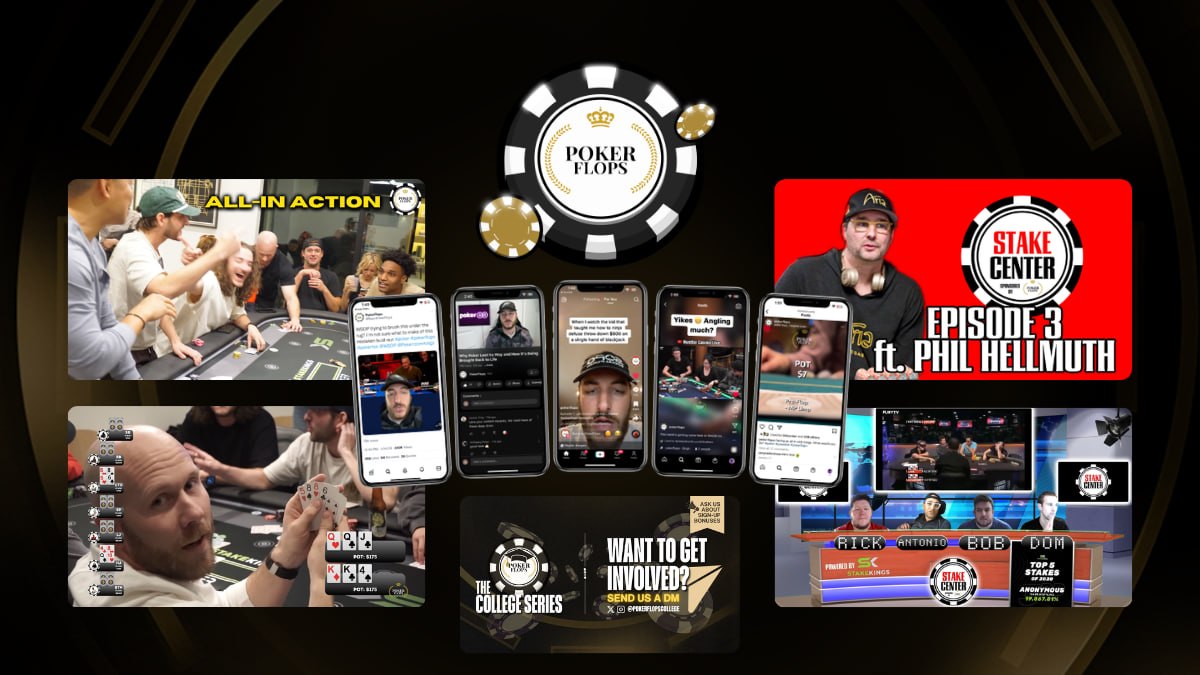
Brand showcase, social content, StakeCenter production, lifestyle vlogs
What started as a ~50-episode podcast evolved into StakeCenter, a 9-episode produced weekly series featuring guests including Phil Hellmuth and Antonio Esfandiari. Each episode was a full hour hyper-edited down to 12-34 minutes: staking picks, news, bets, poker opinions, with 3-4 video feeds, unique audio tracks, animations, and a digital monitor for graphics.
I was the sole editor, working Monday through Thursday to deliver each Friday. The show landed our first brand partnership with StakeKings, who were so impressed by the audience they eventually became an investor in SOPO.
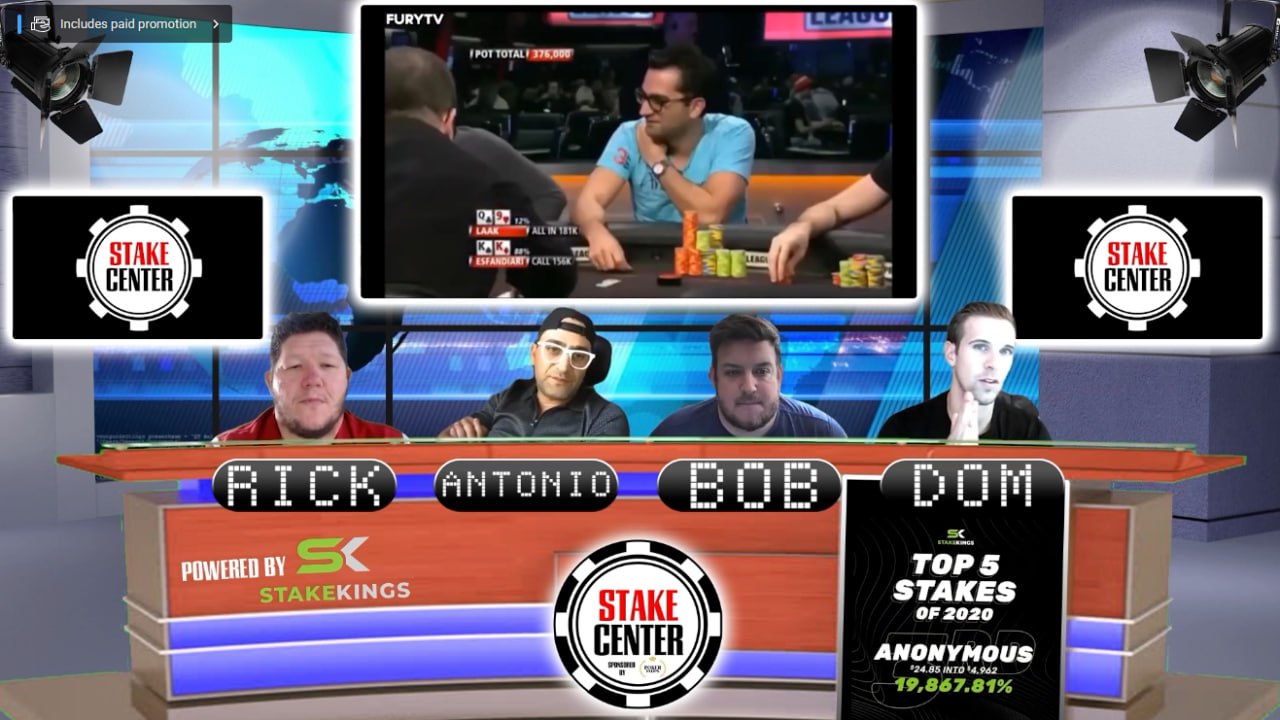
StakeCenter, full virtual studio, 4 hosts, animated overlays, StakeKings sponsorship
Recruited, onboarded, and managed a network of 50+ influencer content creators posting on behalf of the brand across X, Instagram, TikTok, and YouTube. Built brand toolkits, content guidelines, managed relationships, and tracked performance. The network became our most powerful organic growth channel, consistently outperforming paid campaigns.
- Platform coverage: X, Instagram, TikTok, YouTube, native content for each
- 1,318 posts on Instagram alone, brand-consistent throughout
- 827 videos on YouTube across the full run
- First-to-market with lifestyle-format poker vlogs, no one else in the space was thinking that way
- Content quality earned WSOP press credentials and main-stage access
WSOP,
Live Production.
For three consecutive years I traveled to Las Vegas as the sole content producer at the World Series of Poker, the biggest event in the poker world. Most recent trip: over two months on-site. I earned media credentials granting main-stage access during live television broadcasts, secured filming permissions in restricted spaces, and worked grueling hours, shooting through 3-4 AM, then editing on-location for next-day turnaround.
Everything you see here? One person.
- Casino vlogs: 2-4 hours of raw footage daily, edited to 20+ minute polished vlogs with same-day turnaround
- Main-stage access: Media credentials earned through months of proactive relationship-building, not paid for
- Built and operated a complete 4-camera live streaming studio in an Airbnb content house, solo
- Learned the entire RFID poker tech stack from scratch in the same window as producing everything else
- Jungleman Cates asked me to be his personal photographer during the trip. Had to decline because I was there for SOPO.
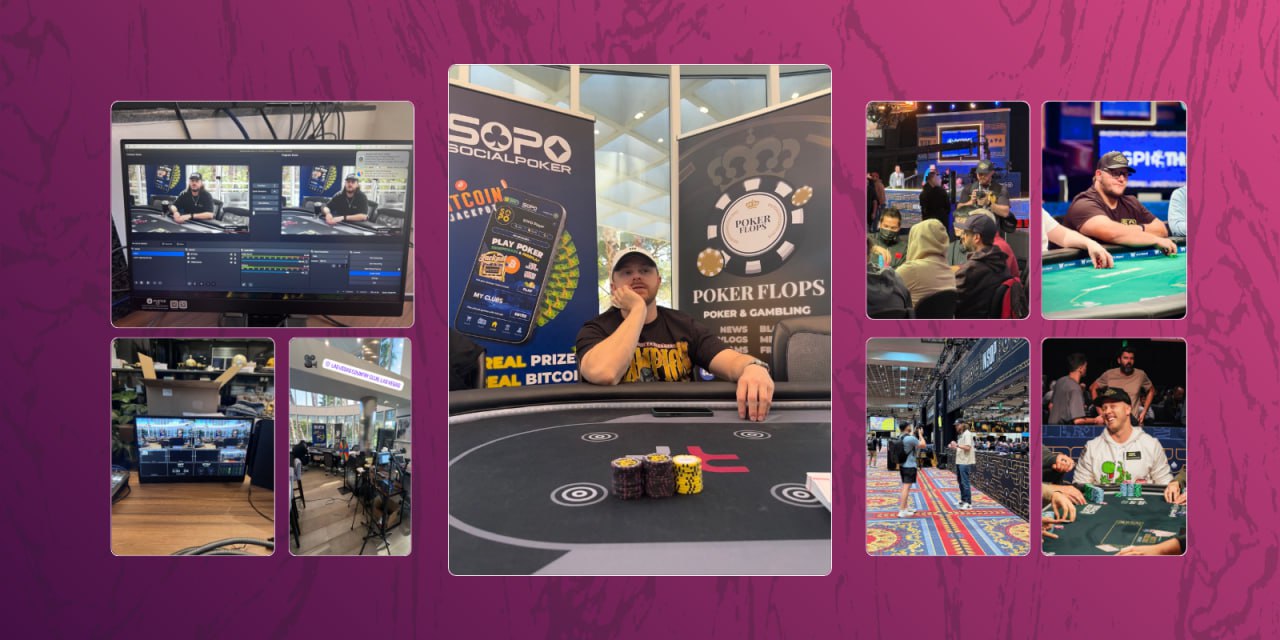
WSOP, live studio setup, main stage, media credentials, casino floor
I designed, built, and operated a complete live streaming studio in the Airbnb content house we rented. Assembled, calibrated, and ran the entire rig for each broadcast:
- 4 camera angles with live switching during play
- RFID poker table, learned the entire software and hardware stack from scratch
- Live graphics board, manually triggered every call, raise, fold, bet value, pot size in real-time while running everything else
- Professional audio, two shotgun mics on booms, live mixer balance
- Lighting, optimized for multiple angles in an Airbnb with a full wall of windows and a loud AC unit to filter from audio
- All of the above, simultaneously, solo
"Shooting 16+ hours then editing on-location sharpened every instinct. Pressure creates diamonds."
Between WSOP sessions, we were at StakeKings' content house in Henderson, a McMansion with a Vegas skyline view. While the team played, I was the one moving around the table with my Sony camera capturing hands, environment, and the energy of private sessions featuring crypto influencers and professional poker players.
I shot and edited two full sessions across back-to-back weeks. Every player got an MTV-style character introduction, body masked out, pulled into an animated card with motion graphics. During hands, I manually edited in every player's cards, bets, stack size, and action as if it were an RFID broadcast table, for full 9-person games. Sound design was engineered by layering songs with their instrumentals, dropping vocals when table talk mattered and bringing them back for cinematic moments.
Shooting, editing, motion graphics, sound design. All solo.
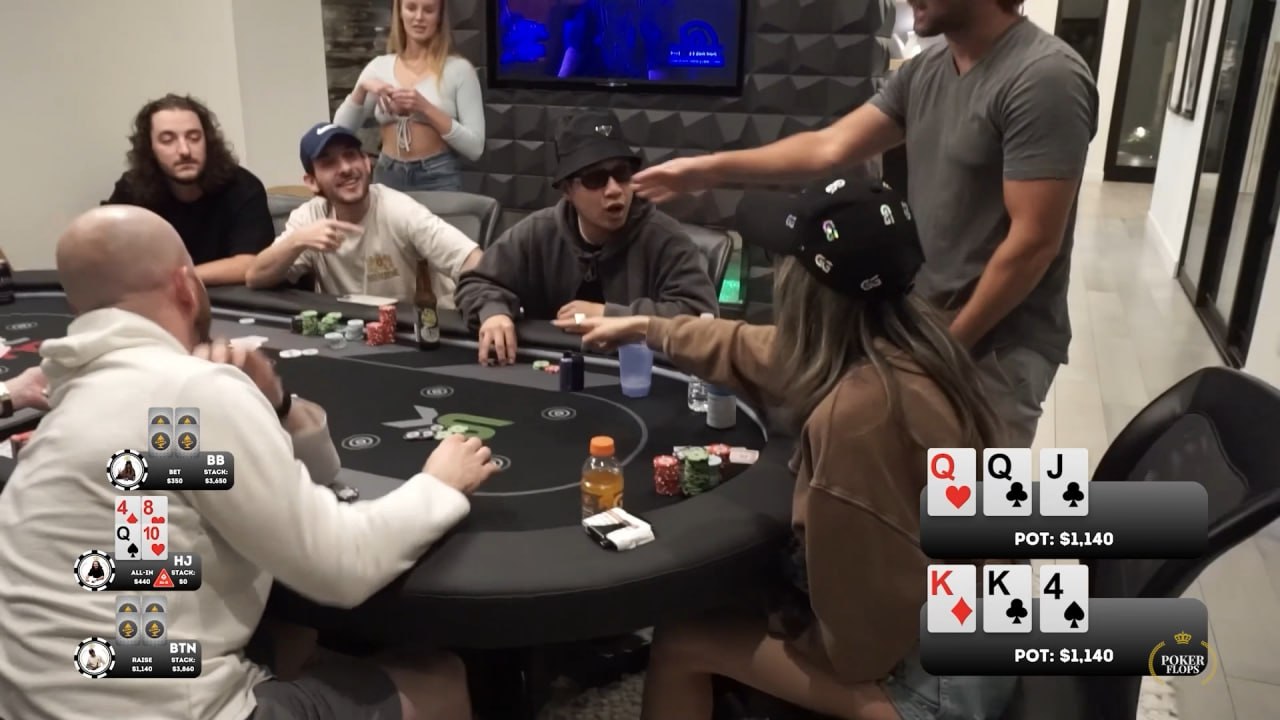
StakeKings sessions, handheld footage with manual RFID-style overlays and player HUDs
MARKETING
& Growth.
As CMO I owned the full marketing stack: paid acquisition, organic growth, investor materials, analytics, influencer management, and team leadership. Every decision was data-informed, every campaign designed to move the needle, every dollar tracked. The result: 67K+ total users, a $4 customer acquisition cost well below gaming industry benchmarks, and pitch materials that contributed to a $25M company valuation.
The most important thing this chapter demonstrates isn't the numbers. It's that design and marketing are the same muscle. Understanding the user is understanding the customer. Every campaign started as a UX question: what does this person need to see, feel, or understand to take the next step? That lens made the work better, and it's carried directly into how I approach design today.
Creative Ad Spend
No hard ad budget. Paid campaigns ran entirely on $1K/month in X business ad credits. Through rigorous creative testing, audience segmentation, and bid optimization on those free credits, I hit a $4 CAC during beta, well below the $8 to $15 gaming industry average.
Organic Growth Engine
A multi-channel content engine across X, Instagram, TikTok, and YouTube. Combined with community outreach and the 50+ creator network, organic became the largest and most cost-effective acquisition channel, growing monthly sessions from 18K to 47K, scaling MAU past 8K, and lifting DAU 50% after major redesign launches.
College Market Activation
A campus acquisition channel across 26+ universities, built by recruiting poker club presidents and fraternity heads, running recurring freerolls, and managing a team of college ambassadors. Delivered 2,100+ users on its own.
- Cornell, UC Berkeley, and UChicago
- UVA, FSU, and UPenn
- 20+ additional campuses nationwide
- 100K+ social followers across platforms with 4.5M+ impressions
- 54K+ new users acquired through combined organic and paid
- $10M+ cash game pot volume reached
- 26+ universities in the college ambassador program
- Team of 5+ including coordinators, content creators, interns
- Pitch decks and investor materials contributing to $25M valuation, every chart and data point intentional
- Lived in GA4, X Ads, Meta Ads, Hootsuite, built custom dashboards, ran A/B tests, delivered analytics readouts to engineering and leadership daily
SEE THE
Design Work.
The UI/UX case studies are where the primary work lives.